Nobody Elected the Guy With the Snowblower: Ottawa's Snow-Shoveling Code
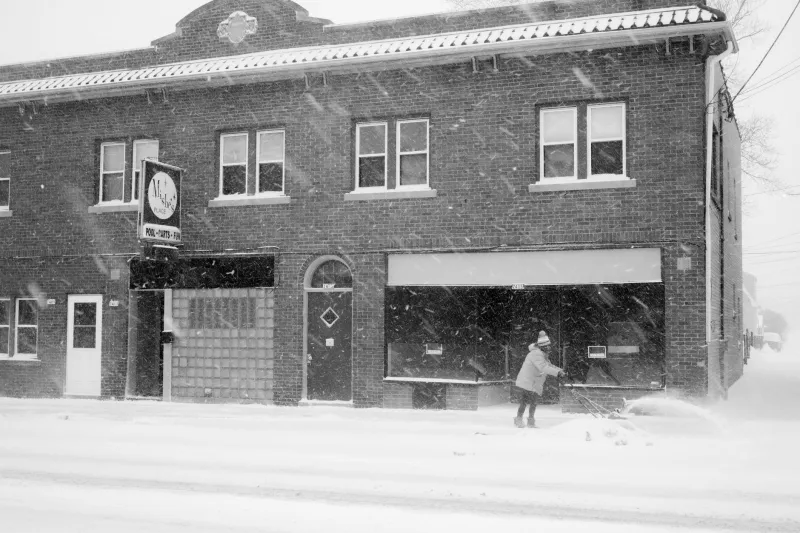
There's a sound that hits Ottawa about six in the morning after a decent snow — not a plow, not a sander, just the dry scrape of a plastic blade on concrete, moving in a rhythm that sounds oddly like someone breathing. That's the town's real snow removal system at work. No uniforms, no dispatch, no budget line. Just people who woke up early and decided the sidewalk in front of their house wasn't going to be the reason somebody fell.
If you've lived here a while, you already know who your block's shoveler is. If you're new, you're about to find out — and possibly get recruited.
The Rules Nobody Wrote Down
Ottawa doesn't have a formal sidewalk ordinance with teeth, and nobody's out there measuring your frontage with a clipboard. Instead there's a loose, widely understood etiquette that mostly boils down to a few things.
You do the whole run, not just your own gate. Cutting a neat little path from your porch to the curb and stopping is technically shoveling. It's also how you tell the neighborhood you're not really participating. The expectation on most blocks is that you clear the full stretch of concrete in front of your property — and if you've got the energy, you knock out the corner ramp or the crosswalk approach too, because that's where the ice gets dangerous and where the crossing guards stand.
Timing is a real thing. The sweet spot is early — before kids walk to school, before the mail carrier makes the loop, before anyone's grandmother attempts the sidewalk to church. It doesn't have to be dawn. It just has to be before the snow has a chance to get walked flat and turn into that hard, slick crust that's ten times the work later.
You don't push it into the street, and you absolutely don't push it into your neighbor's cleared walk. There is a special place in the local imagination for the person who blows a two-foot berm across the sidewalk they just finished.
Storm drains are everybody's job. The one that floods the low spot on your block every February? That's not the city's problem to guess at — it's a shared one. Digging out the grate before the melt starts is the closest thing Ottawa has to a civic sacrament in March.
The 4:30 Club
Ask around and you'll hear about the early crew. Retirees, mostly, plus the occasional shift worker coming off nights, and one guy who seems to own every snowblower attachment ever manufactured. They don't coordinate formally, but they know each other. When the forecast calls for six inches, the guy with the big two-stage machine tends to start on the widest stretches — the corner, the ramp, the long block by the school — while the hand-shovel people handle the tighter stuff.
It's efficient in a way that a municipal plan never quite manages, because the people doing it know exactly where the water pools, where the kids cut through, and which sidewalk has a cracked lip that catches a blade.
The Check-In Network
Here's the part that actually matters more than the scraping: Ottawa looks after the people who can't look after themselves.
If you're over eighty, or you use a walker, or you're recovering from a hip replacement, your sidewalk gets done. Not always by the same person, and usually without a lot of conversation about it. Somebody just does it. There's a woman on the north side of town who's been clearing her neighbor's walk for eleven years and has never once been asked. There are high schoolers who do it for gas money and end up as de facto family.
What makes this work is that the information moves through ordinary channels — church, the coffee shop, the school pickup line, the cluster of people standing in a driveway staring at the sky. If you tell somebody your dad isn't getting around well this winter, it'll travel.
If you're the one who needs help, the polite thing in Ottawa isn't to suffer silently. It's to say something to a neighbor, or to a church, or to the family across the street. Nobody will make a thing of it, and nobody will bring it up again afterward.
Practical Ways to Join In
- Get out early, once. The first snow of the season sets the tone for your block. If you're out there scraping at 6:30, you'll end up in the loose rotation by January.
- Introduce yourself to the person with the machine. Snowblowers are expensive to run and annoying to maintain, but the people who own them tend to loan them out for large storms — with a thank-you and a bag of salt.
- Keep a spare shovel by the door. The number of people who own two shovels is much smaller than the number who need one at 7 a.m.
- Watch the corner ramps and the crossings near schools. They're the highest-traffic, lowest-glory spots in town, and they're where a good deed actually prevents an injury.
- Salt sparingly. Ottawa's concrete is old in places, and heavy salt eats it. A little sand or a light sprinkle goes further than a whole bag dumped on a step.
- Adopt a storm drain. Find the one on your block, clear it in the melt, and you'll have earned your neighborhood's quiet gratitude forever.
- Offer before you're asked. A quick knock on the door of the person whose driveway is always the last to clear goes a long way, and it costs you nothing but a set of cold hands.
What the Scraping Really Is
It's easy to frame this as a chore, but spend one winter paying attention and it reads more like a small, unglamorous civic tradition. Ottawa doesn't advertise it. Nobody gets a plaque. The reward is simply that the town stays walkable, the older folks keep their independence a little longer, and the people with the shovels nod at each other on Main Street like members of a club that has no dues.
So when the forecast turns and the first real snow of 2026 starts piling up, listen for that scrape around six in the morning. Somebody's already out there. You can be, too.