You Walk Past It Every Day: An Afternoon Tour of Ottawa's Most Overlooked History
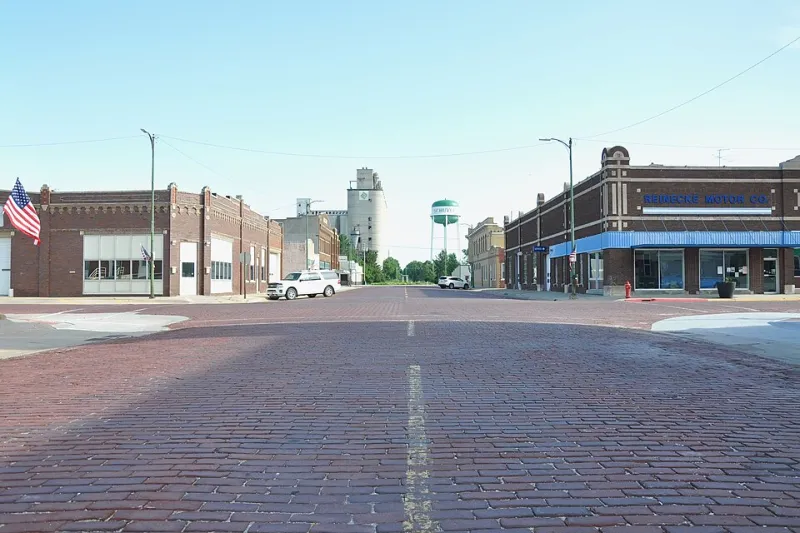
Photo: SharonPapierdreams, CC BY-SA 4.0, via Wikimedia Commons
There's a particular kind of blindness that comes with living in a town long enough. You stop seeing things. The plaque by the post office becomes wallpaper. The odd little stone marker on the edge of a parking lot is just... there.
This article is a cure for that. We put together a self-guided loop of Ottawa's easiest-to-miss historical landmarks — the kind you can knock out in an afternoon, on foot, with nothing but comfortable shoes and a little curiosity. If you're new to town, consider it your orientation. If you've lived here your whole life, consider it a challenge: how many of these have you actually noticed?
Start Where the Wheels Started
Begin at the edges of town, where the ruts are. Sections of the old Santa Fe Trail passed through this part of Franklin County, and while the wagons stopped rolling more than 150 years ago, traces of those crossings still show up in odd places — shallow swales in pastures, markers along rural roads, and interpretive signs that most drivers blow past at 55 miles an hour.
The trail markers on the outskirts of Ottawa are a good reminder that before this was a town, it was a thoroughfare. People were just passing through. The town itself only exists because somebody decided to stop.
Downtown's Building-Side Time Capsules
Once you head toward Main Street, slow your pace dramatically. The historic commercial blocks downtown are loaded with details that reward anyone who looks up instead of straight ahead.
Check the cornerstones. Several of the older brick buildings carry construction dates carved right into the masonry — the 1880s show up a lot. Look at the upper floors, too. Those decorative cornices and faded painted signs advertising businesses that closed before anyone alive was born are the closest thing Ottawa has to a public archive.
A few favorites worth hunting for:
- Ghost signs — faded advertisements painted directly onto brick, some barely legible now
- Date stones and cornerstones marking when each block went up
- Old bank entrances and hardware-store doorways repurposed into modern shops
The Old Depot Museum is the natural anchor for this stretch if it's open when you pass through — it's the place to connect the dots between the buildings you just walked past and the people who built them.
Cross the River, Cross the Eras
The bridges over the Marais des Cygnes aren't just ways to get across town. They're a timeline in steel and concrete, each one telling you something about when it was built and what the town needed at the time. Walk the riverwalk and you'll get views of more than one generation of bridge engineering from a single vantage point.
The river itself deserves a moment. Long before Ottawa was platted, this waterway was the reason anyone settled here at all — water power built the early mills, and the mills built the town. There are markers along the water that explain it far better than we can, and almost nobody stops to read them.
The Quiet Ones
Some of the most meaningful landmarks in Ottawa aren't buildings at all. They're benches with dedication plaques. Trees planted for people. A bell from an old school. A church cornerstone listing founding members whose great-grandchildren still live a few blocks over.
Keep an eye out as you wander the residential streets between downtown and the river. History in a town like Ottawa isn't concentrated in a museum district — it's scattered, small, and easy to miss unless you're looking.
Your Afternoon Loop
Here's the route we'd suggest, roughly two to three hours at a stroll:
- Trail marker on the edge of town — start with the oldest story
- Downtown Main Street blocks — cornerstones, ghost signs, upper-floor architecture
- Old Depot Museum (if open) — context for everything you just saw
- The bridges and riverwalk — the industrial-era chapter
- Residential side streets — the quiet, personal landmarks
Bring your phone for photos, but honestly, the best move is to just walk and look up. The plaques will find you.
Why It Matters
A town's landmarks only stay meaningful if people notice them. Every painted sign that fades without anyone photographing it, every cornerstone story that goes untold — that's a little bit of Ottawa slipping away.
So take the walk. Bring the kids. Point at things. And if you spot a marker or a building detail we missed, tell us about it — this list is meant to grow.